


Does your company combine employees on flexitime, staff working remotely and workers on construction sites? The rules on recording working time are not the same for each of them. Some obligations already exist in Belgium, others will come with the mandatory time recording expected for 2027. This guide sorts them out, situation by situation, and explains how to set up a recording system that holds up for all your teams.
Key points
- Flexitime: a time-tracking system has been mandatory since 2017. It records the worker's identity and daily working time, kept for five years.
- Remote work: remote workers could be excluded from the new obligation, but nothing is confirmed. Hours still have to be proven in a dispute.
- Construction sites: from 1 April 2027, everyone present on a site worth €500,000 excl. VAT or more will have to register their own arrival and departure via Check-in@Work.
- Travel: travel between two sites, or between the head office and a site, is working time; commuting from home is not.
- Status: the law on time recording has not yet been passed at the date of this article (27 November 2026). 1 April 2027 remains the date to prepare for.
Mandatory time recording in 2027: what to know before looking at each team
The future law will require every employer to have an objective and reliable system to measure the daily and weekly working time actually performed. No technology would be imposed: badge, app, software, or even a reference schedule supplemented by recorded deviations. According to Partena Professional, the obligation would take effect on 1 January 2027, with employers not yet equipped given until 1 April 2027.
Two points matter particularly for mixed teams. First, existing sector obligations and schemes continue to apply: flexitime tracking and Check-in@Work in construction do not disappear. Second, some categories of workers could be excluded, including remote workers and mobile functions, but these exceptions still have to be confirmed. For the full timeline, read our guide to mandatory time tracking in 2027.
Here is what applies in each situation at a glance:
Flexitime: a time-tracking system is already mandatory
What flexitime means
Under flexitime, the worker chooses when to start and finish the day, and when to take breaks, within a framework set by the company: core periods, when presence is mandatory, and flexible periods, when the worker adjusts their schedule. Long merely tolerated, this scheme was given a legal framework by the Act of 5 March 2017 on workable and agile work (Article 20ter of the Labour Act of 16 March 1971), as explained by the Federal Public Service Employment (in French).
To be valid, flexitime must be introduced by a collective labour agreement (CLA) or by the work rules, with an annex describing the rules precisely: core and flexible periods, the reference period and how surplus or missing hours are handled. If you apply flexible hours informally, without this written framework, that is the first thing to put right.
The limits to respect
- A maximum of 9 hours a day and 45 hours a week.
- Normal weekly working time must be respected on average over the reference period: three calendar months by default, up to one year if the CLA or work rules provide for it.
- A balance of surplus or missing hours can be carried over to the next period, in principle up to 12 hours (more if a CLA provides for it).
- The worker is paid on the basis of their average weekly working time, whatever the number of hours worked each week.
Hours worked within these limits do not entitle the worker to overtime pay. However, if the employer asks the worker to exceed the flexitime limits, in the cases provided for by law (exceptional increase in work, voluntary overtime, unforeseen necessity), those hours fall outside the scheme and may give rise to overtime pay and compensatory rest.
What your time-tracking system must record
This is the most frequently overlooked obligation. According to the Federal Public Service Employment (in French), an employer applying flexitime must provide, for each worker concerned, a time-tracking system that records:
- the worker's identity;
- the duration of their work, day by day;
- for a part-time worker with a fixed schedule, also the start and end of work and of breaks.
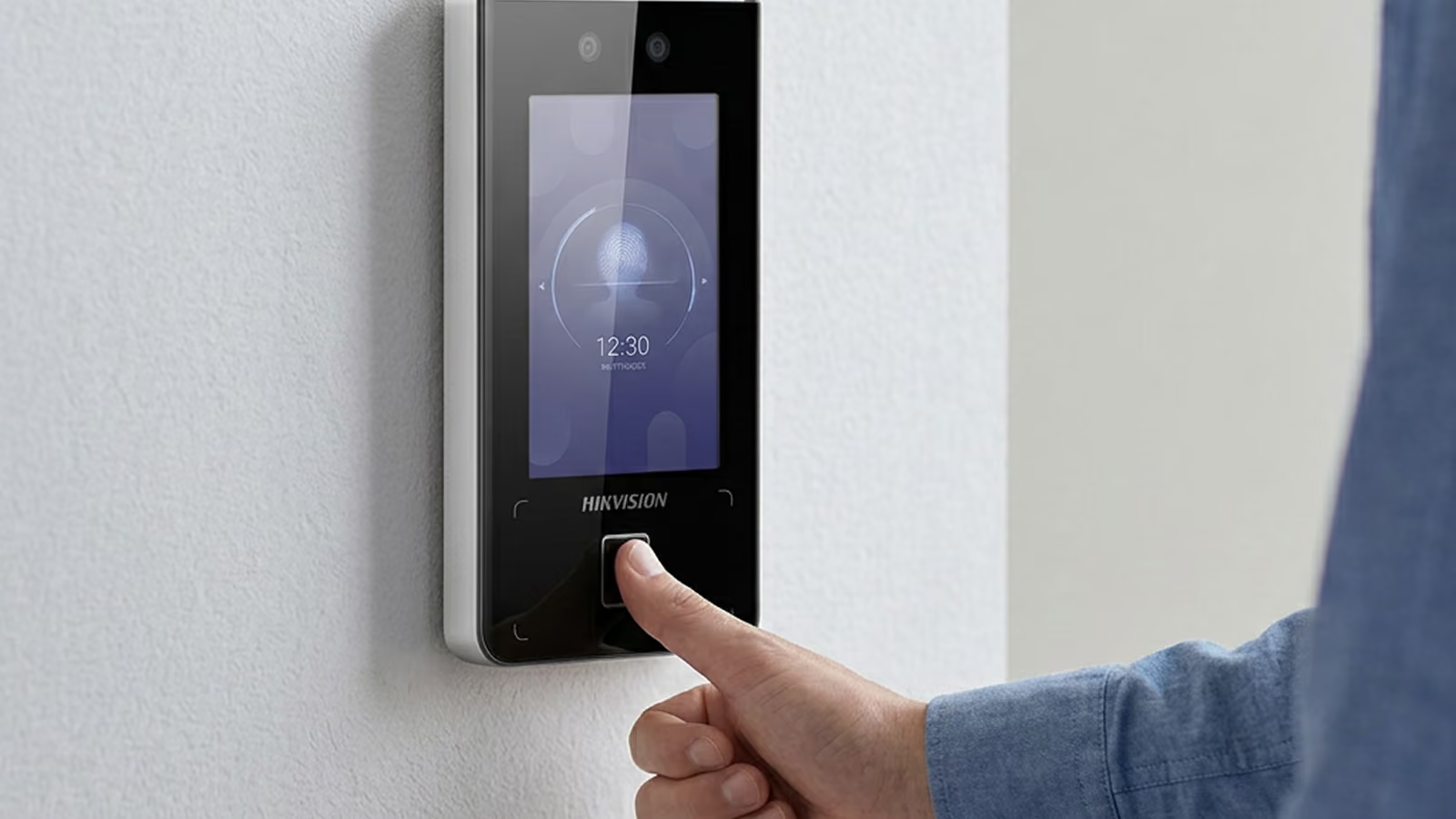
These data must be accessible to each worker and to the labour inspectorate, and be kept for five years. The worker must also be able to know, at any time, their exact balance of surplus or missing hours over the reference period. Electronic recording is not required, but a spreadsheet filled in at the end of the month hardly meets these requirements: it does not show when the hours were entered and makes consultation by the worker difficult.
In practice: the most reliable approach is for workers to record their own start and end times as they happen, with a badge or on their phone, and for the period balance to be calculated automatically. Decide who approves corrections (a forgotten clock-in, an outside meeting) and keep a trace of every change.
What 2027 changes for flexitime
Very little, if your time-tracking system is already in place and reliable: Partena Professional explicitly lists flexitime tracking among the existing mechanisms that will continue to apply. Simply check that your system can reconstruct the daily and weekly working time actually performed, which the future law will require from everyone. If you have no tracking today, you are already in breach, and the 2027 deadline is an opportunity to put it right.
Remote work: excluded from the new obligation?
What the draft provides
According to Partena Professional, some categories could be excluded from the future recording obligation when their working time cannot be measured or set in advance because of the nature of their job. Homeworkers and remote workers are mentioned. These exceptions still have to be confirmed by the final text.
Read this carefully: the exclusion targets functions whose time cannot be measured. An employee who works from home two days a week with the same hours as in the office has perfectly measurable working time. Many hybrid workers are therefore likely to remain within the scope of the obligation. Until the text is passed, assume your remote workers will be concerned.
The rules that already apply to remote work
Regular remote work is governed by CLA no. 85 and occasional remote work by the Act of 5 March 2017. The Federal Public Service Employment (in French) points out that the remote worker organises their work within the working hours applicable in the company, with a workload comparable to that of colleagues in the office. For regular remote work, the written agreement must specify, among other things, how often remote work takes place, possibly the days and hours concerned, and when the worker must be reachable.
Occasional remote work (a strike, severe weather, a personal reason) must be requested in advance and can be refused by the employer, in writing and with reasons. The Federal Public Service Employment (in French) specifies that occasional remote workers keep the same rights and the same workload as on company premises.
How to record remote workers' time
Even if the exclusion were confirmed, minimal recording protects you: if overtime is claimed, an employer with nothing to show is in a weak position. Two approaches work:
- Clocking in from a computer or phone, with the same tool as in the office. This is the simplest solution for hybrid workers: one history, wherever they work.
- A reference schedule plus recorded deviations: the agreed schedule is the baseline and the worker records extra hours, hours requested in the evening or absences. This is light, provided deviations really are recorded on the same day.
In both cases, stick to what is necessary: recording working time does not justify monitoring on-screen activity. Set the rules in the work rules or the remote work agreement, and tell workers what is recorded and why.
Construction sites: two overlapping obligations
Check-in@Work: arrival and departure in real time from 1 April 2027
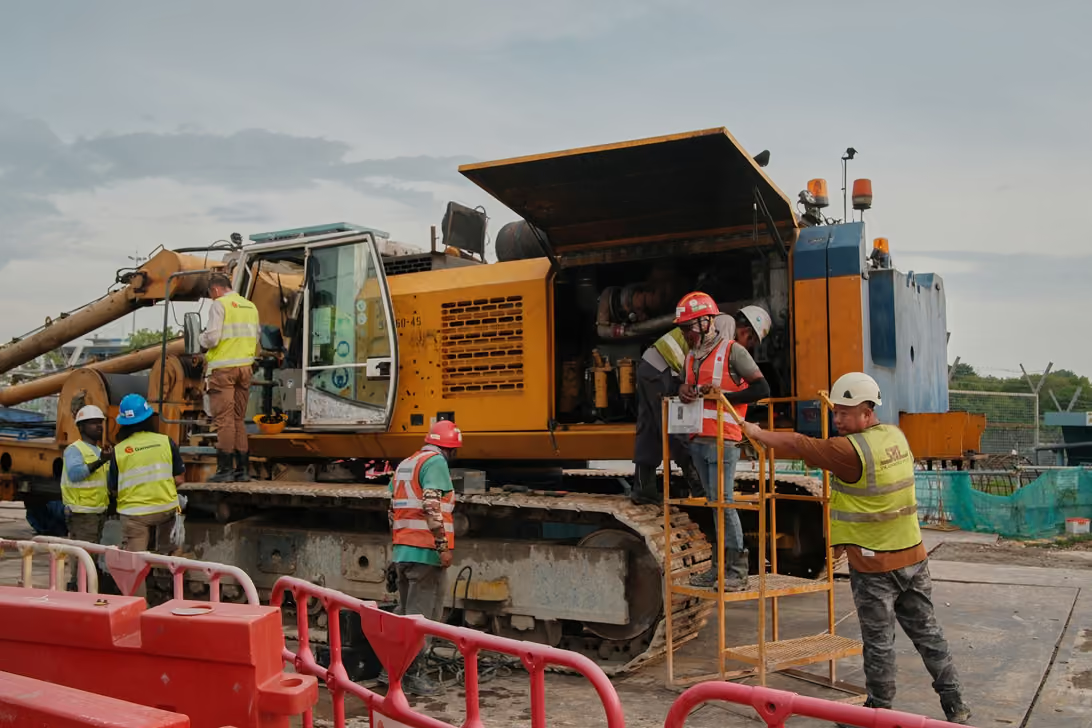
According to the National Social Security Office (in French), from 1 April 2027 attendance registration is extended to immovable property work (excluding cleaning) and to ready-mixed concrete deliveries, on sites where the total cost is at least €500,000 excl. VAT. Everyone registers an "in" on arrival and an "out" on departure, on site and immediately: registering in advance is no longer possible. Breaks do not have to be registered.
The obligation covers employees, but also self-employed workers, temporary workers, students and trainees. Responsibility is shared between the contractor and the person doing the work. We cover this change in detail in our article on Check-in@Work 2027 on construction sites.
Why Check-in@Work is not enough for 2027 time recording
Check-in@Work is designed to fight social fraud: knowing who is present on a given site. Mandatory time recording targets working time. Several parts of a site worker's day are therefore not covered by Check-in@Work:
- time spent at the depot or workshop (loading, preparing equipment);
- sites below the threshold of €500,000;
- travel between two sites;
- breaks, which Check-in@Work does not record.
Travel: what counts as working time
This is often a grey area for field service companies. The Federal Public Service Employment (in French) is clear: travel between two workplaces for the same employer, i.e. between two sites, two customers, or between the head office and a site, is working time. Commuting between home and the workplace is not. A worker who stops at the depot to load the van before driving to the site is therefore working from the moment they arrive at the depot.
If your sector rules provide for mobility allowances, also check how they are calculated: for construction, see our guide to Joint Committee 124.
How to organise time recording on site
The simplest approach is to use one tool for both obligations: the worker registers arrival and departure on site from their phone, the tool submits the Check-in@Work declaration when the site is concerned, and at the same time records the hours spent at the depot and travelling. This avoids double entry and inconsistencies between the attendance declaration and payroll. To compare the options, see our guide time clock, badge or app.
For technicians moving between customers, the question of excluding "mobile staff" also arises. It remains unclear and contested: do not rely on it, and record their hours, ideally in the tool that already manages their jobs.
Office, home, site: one tool?
We will show you in a free demo how T-Report records the time of all your teams in one place.
Mixed teams: 5 steps to consistent time recording
- List your working arrangements: fixed hours, flexitime, regular or occasional remote work, sites covered by Check-in@Work, mobile technicians.
- Check your current obligations: flexitime tracking system, written remote work agreements, Check-in@Work declarations. Anything missing today is already a risk.
- Define what you record for each arrangement: start and end, daily duration, deviations from the schedule, travel. Write it into the work rules.
- Choose one tool that works in the office, at home and on site, so that all data end up in the same place.
- Link time recording to payroll so that flexitime balances, overtime and allowances go to your payroll provider without double entry.
How T-Report records the time of all your teams
T-Report is Belgian planning and time-tracking software designed for companies with teams in the office, at home and in the field:
- clocking in from the mobile app, a time clock or a smartwatch;
- the Planning & time tracking module, which compares planned and actual hours and highlights deviations;
- the Check-in@Work declaration straight from your teams' clock-ins;
- business travel tracking, with mobility allowances calculated according to your joint committee.
Subscriptions start at €10 per user per month.
This article is for information only and does not constitute legal advice. It will be updated once the law on working time recording is passed.

Frequently asked questions about flexitime, remote work and construction sites
Do employees on flexitime already have to record their time?
Yes. Since the Act of 5 March 2017, an employer applying flexitime must keep a time-tracking system recording each worker's identity and daily working time. The data are kept for five years and can be consulted by the worker and by the labour inspectorate.
Will remote workers have to record their time in 2027?
This has not been decided yet. Excluding remote workers is being considered when their working time cannot be measured or set in advance, but the final text still has to confirm it. A hybrid worker with known hours will probably remain in scope.
Is Check-in@Work enough for mandatory time recording in 2027?
No. Check-in@Work records attendance on sites worth €500,000 excl. VAT or more, without breaks. Mandatory time recording covers actual working time, including at the depot, during travel between sites and on smaller sites.
Is travel between two construction sites working time?
Yes. According to the Federal Public Service Employment, travel between two workplaces for the same employer (between two sites, two customers, or between the head office and a site) is working time. Commuting between home and the workplace is not.
How many hours can be worked under flexitime?
No more than 9 hours a day and 45 hours a week. The worker must respect their normal weekly working time on average over the reference period, which is three months by default and up to one year if the CLA or work rules provide for it.
Other articles you might like.


Ready to save hours every week?
We will visit you in person for free to show you how T-Report could integrate into your business.